The recurring theme
of money laundering is acquiring money through illegal means and using the
mainstream financial system to legitimize it. In Kenya, criminals that have
been found engaging in money laundering are hardly prosecuted. This acts as an
enabler of money laundering in that there is hardly any enforcement of money
laundering legislation. As a result, money laundering has risen in scale.
Additionally, Kenya is also at higher risk of being exploited by money
launderers as it is the financial hub of East Africa.
 On a macro level, money laundering is a global problem
and global measures are in place to resolve it. On a micro level, money
laundering is a problem that each country can solve through the implementation
of local legislation to create a unified national policy that sets the agenda.
Individual organizations can tackle it by following through with already
established best practice money laundering prevention strategies. The work of
preventing money laundering is the onus for organizations and society at large
and should not be left to regulatory environments.
On a macro level, money laundering is a global problem
and global measures are in place to resolve it. On a micro level, money
laundering is a problem that each country can solve through the implementation
of local legislation to create a unified national policy that sets the agenda.
Individual organizations can tackle it by following through with already
established best practice money laundering prevention strategies. The work of
preventing money laundering is the onus for organizations and society at large
and should not be left to regulatory environments.
I further posit that the prevention of money laundering
is important because the success of organized criminal networks depends on the
global financial system. The financial system is crucial for their functioning.
There are many reasons that make anti-money laundering necessary. To name a
few: Prevention deters, and defeats organized criminal networks, failure to
prevent encourages them.
The flagrant disregard for anti-money laundering laws
and regulations infringes upon a country’s rule of law and therefore lessens
the effectiveness and power of the criminal justice system. Money laundering
promotes corruption, the accumulation of wealth through deceitful means by
criminals leads to the deterioration of a country’s economy.

The continued prosperity of financial institutions
depends on their ability to be of interest for and to harbor justifiable funds.
The reputational damage inflicted by being used for money laundering diminishes
their profitability and negatively affects their sustenance. To preserve
themselves, financial institutions ought to serve their personal interests by
exposing money launderers to agencies or authorities responsible and facilitating their prosecution. Preventing crime
is good for society, the security that comes with it enables the free movement
of people and foreign investment without fear.
One of the reasons why Kenya and all East African Community States are vulnerable to money laundering is that it is a cash-based economy. This makes it easier to move cash around. Due to the globalization of financial markets and financial liberalization, money laundering has been made easier by mobile banking which is common in Kenya.
Most transactions are done through mobile money
providers. Although there are other mobile money providers, M-Pesa is
extensively ubiquitous enjoying a reach of over 26 million users and with
transactions totaling 6.8 billion Kenya shillings as of 2017 according to
Safaricom’s financials for the year 2016/2017. This makes M-Pesa highly
susceptible to being used for both money laundering and terrorist financing.
FATF, the international governing agency that provides guidance on money
laundering prevention, has out of its 40 recommendations, laid out three
recommendations for client due diligence. In these 3 recommendations, it
emphasizes that a robust client due diligence procedure is important because
this gathering of information allows FIs to know a client’s source of funds so
that in case of suspicion of money laundering, the data can be used to trace,
investigate and prosecute.
It adds that money laundering can be prevented and
identified by conducting due diligence and that it is possible for research to
reveal hidden criminal networks and suspicious sources of funds before FIs
involve themselves with new clients. Revealing hidden risk before client
on-boarding and during a client’s tenure can protect a FI from taking on risky
clients that expose it to money laundering, terrorist financing and other forms
of financial crime. Due diligence information can be used to know if a client
is laundering money through the FI or is acting on behalf of a criminal or
money launderer. When conducting due diligence, it is possible to reach a dead
end. It is at this point that a FI should decide whether to question the client
or not take them on.
A 2012 report by Griffith University, Australia places
Kenya second after the US in the ease of setting up a shell company. Due to
this ease, shell companies are commonly used for laundering money.
There is no central document repository to verify
company and document authenticity. Government legislation should provide
provisions for the introduction of a central registry to be made available in
the public domain with information on all beneficial owners of companies
operating in Kenya.
Shell companies aid money laundering by obscuring
identity, purpose, and source of funds. Ending company obscurity is fundamental
in fighting money laundering.
There has been an increase in the loosely regulated cash
movement underground banking system of hawala. Underground banking systems have
the potential to be used for criminal activity. Hawalas could be owned or used
by money launderers to transfer illicit funds disguised as legitimate money.
For example, a hawala agent trusts an associate in the relevant country to pay
the final recipient and then transfers his own money as money transacted by the
client. Hawala agents can send more money than initially transacted, therefore
moving illicit funds from one location to another. Money launderers have been
known to use hawalas in the placement stage of money laundering. In a process
known as smurfing, they deposit different amounts of money in different
locations and at different times to multiple individuals who have been
recruited. Once these individuals receive the money they can bank it as their
own personal or business earnings, making it appear clean. Due to the long-term
political instability that has plagued Somalia, the country lacks a formal
banking system. This has led to an over-dependence on hawalas for survival by
the Somali community in both Kenya and Somalia.
A 2016 report by the International Narcotics Control
Strategy Report (INCSR) published by the US Department of state established
that hawalas with branches in Kenya have been used to fund Al Shabaab.
As global agencies; The UN, The Council of the EU and
FATF; among other bodies, have created anti-money laundering principals and
protocols that are to be followed globally. Based on these principals, the
agencies adopt joint actions aimed at specific situations where their actions
are presumed as mandatory. They adopt common positions which cover general
jurisdictions. One of these principals is designating terrorist financing as a
predicate offense of money laundering. Terrorist financing is considered a
predicate offense because it is a component of money laundering. Recommendation
5 of FATF specifically requires countries to designate terrorist financing as a
predicate offense of money laundering. Due to the link between these two
crimes, hawalas and to Somalia, the monitoring and regulation of Hawalas ought
to be stricter.
The 2016 report by INCSR indicates that the lack of
access to a formal banking system in Somalia and more so for its expatriate
community has driven demand for Hawalas and have thus quickly evolved into
“banks” and their supervision ought to be equivalent to that of mainstream
banks.
 However, no improved supervision has been documented.
Hawalas are favored because there is little due diligence required to transact
and fund transfers are rapid, with the approval of transactions occurring in
minutes. The data on how much money is moved via hawala in Kenya is not
publicly available which makes their use for money laundering and terrorist financing
more obscure, harder to monitor therefore impeding prevention. Hawalas present
the highest threat when it comes to financing terrorist groups. In its
anti-terror efforts, Kenya must remain vigilant of its financial system as
vigilance would cut off funding of terrorist cells therefore reducing and
preventing terrorism in the region. It is in the interest of broader terrorism
prevention goals that financial flows for Hawalas be monitored so as to
understand the extent to which the remittance system is abused by terrorists.
The banking regulator and the financial intelligence unit must be involved in
identifying their suspicious transactions as it is important to understand how
the threat of terrorism affects Kenya geopolitically, economically and socially.
However, no improved supervision has been documented.
Hawalas are favored because there is little due diligence required to transact
and fund transfers are rapid, with the approval of transactions occurring in
minutes. The data on how much money is moved via hawala in Kenya is not
publicly available which makes their use for money laundering and terrorist financing
more obscure, harder to monitor therefore impeding prevention. Hawalas present
the highest threat when it comes to financing terrorist groups. In its
anti-terror efforts, Kenya must remain vigilant of its financial system as
vigilance would cut off funding of terrorist cells therefore reducing and
preventing terrorism in the region. It is in the interest of broader terrorism
prevention goals that financial flows for Hawalas be monitored so as to
understand the extent to which the remittance system is abused by terrorists.
The banking regulator and the financial intelligence unit must be involved in
identifying their suspicious transactions as it is important to understand how
the threat of terrorism affects Kenya geopolitically, economically and socially.
There is an influx of Chinese nationals in Kenya who set
up companies for various businesses. These companies deal in large cash
transactions in foreign currencies which are deposited in banks and then
immediately transferred to other countries. This rapid movement of funds, many
times and in various countries and accounts raises a money laundering concern.
This process resembles both the placement and layering stages of money
laundering. Placement involves the initial inception of money into the formal
financial system. Placement is a criminal offense and once detected must be
reported by a bank’s employees through the filing a suspicious transaction
report. An example of the placement technique is where a money launderer
deposits money by recruiting multiple individuals using different amounts,
locations, and timing. This practice prevents detection because the individuals
deposit the money multiple times in diverse bank accounts. Layering involves
incorporating complex layers of financial transactions to obscure the money
trail. Here, the launderer hides their tracks through an intricate series of
techniques that obscure the history of the money.
For example, a criminal might borrow against a cash
deposit to get a mortgage, creating a transaction that is one layer away from
the original transaction and then eventually buys a house using the mortgage,
which puts the money back into the legitimate economy. The purpose of layering
is to further distance the funds from their origin and to properly infiltrate
the financial system and use the money freely in any legal system. Most of the
Chinese companies are cash intensive businesses (CIBs). Currently, the Central
Bank of Kenya has warned financial institutions to be wary of cash intensive
businesses such as supermarkets, car dealerships, liquor stores, and casinos.
Globally and in general CIBs pose a greater risk of
money laundering in that funds from a legitimate business can be mixed with
funds from an illegal business. Blending funds from a local personal CIB with
funds from an illegal business makes it difficult to determine which funds have
been generated by the genuine business.
 Further, it becomes difficult to authenticate the
ultimate source of funds because their accounts are majorly funded through cash
deposits. The destination of these funds is mostly to Asian countries such as
Singapore and Hong Kong. What raises further suspicion is that the purpose of
the transfers remains indistinct and not clearly defined. An example of a
cash-intensive sector that can be used for money laundering is the real estate
sector. Money launderers layer their funds quickly in Kenya through the
purchase of highly valued residential property. In Kenya, it is quite easy to
buy highly priced real estate using cash and using little known third parties
to disguise the ultimate owner. Real estate agents lack frameworks to report
suspicion, the sector is loosely regulated, and the banking regulator has not
instituted compliance frameworks that address limits of using cash and policies
that identify beneficial ownership, which would prevent the use of third
parties.
Further, it becomes difficult to authenticate the
ultimate source of funds because their accounts are majorly funded through cash
deposits. The destination of these funds is mostly to Asian countries such as
Singapore and Hong Kong. What raises further suspicion is that the purpose of
the transfers remains indistinct and not clearly defined. An example of a
cash-intensive sector that can be used for money laundering is the real estate
sector. Money launderers layer their funds quickly in Kenya through the
purchase of highly valued residential property. In Kenya, it is quite easy to
buy highly priced real estate using cash and using little known third parties
to disguise the ultimate owner. Real estate agents lack frameworks to report
suspicion, the sector is loosely regulated, and the banking regulator has not
instituted compliance frameworks that address limits of using cash and policies
that identify beneficial ownership, which would prevent the use of third
parties.
One of the key ways of apprehending money launderers is
providing meaningful information to law enforcement that they can act upon.
Kenya’s financial reporting center (FRC) is the
dedicated office that seeks to investigate and prosecute money laundering
conducted through financial institutions. The general objective of any
intelligence unit is to analyze financial transaction data and use it to follow
the money trail, investigate and apprehend criminal networks. In recent times,
the FRC has been accused of being inefficient because it lacks specially
trained staff skilled in compliance principles and technical knowledge to
investigate financial crime. Being a government body, there is no demonstrated
political will and intentional effort to support capacity building. The
center’s methods of reporting suspicious transactions are traditional, and it
lacks high-level computing systems to aid in apprehending money launderers
quickly.
The Kenya Proceeds of Crime and Anti-Money Laundering
Act of 2009 (amended 2017) is the law that criminalizes money laundering. A
good provision of the act is the revocation of an institution’s license as
deemed fit and barring employment of individuals in specified circumstances.
The act mandates that monetary fines should be imposed on individuals and
corporates found in breach of money laundering. I recommend that punishment
through jail terms would be more effective in curbing the practice. Reason
being that in order to fight money laundering properly, its offenders should
endure stricter consequences such as being jailed so that money laundering can
be seen as a serious crime like any other. This laxity is an enabler and sends
the message that FIs /individuals can buy their way out through fines. This
makes them obnoxious and more willing to be complicit in aiding money
launderers.
The recurring theme of money laundering is acquiring
money through illegal means and using the mainstream financial system to
legitimize it. In Kenya, criminals that have been found engaging in money
laundering are hardly prosecuted. This acts as an enabler of money laundering
in that there is hardly any enforcement of money laundering legislation. As a
result, money laundering has risen in scale. Additionally, Kenya is also at
higher risk of being exploited by money launderers as it is the financial hub
of East Africa.
On a macro level, money laundering is a global problem
and global measures are in place to resolve it. On a micro level, money
laundering is a problem that each country can solve through the implementation
of local legislation to create a unified national policy that sets the agenda.
Individual organizations can tackle it by following through with already
established best practice money laundering prevention strategies. The work of
preventing money laundering is the onus for organizations and society at large
and should not be left to regulatory environments.
I further posit that the prevention of money laundering
is important because the success of organized criminal networks depends on the
global financial system. The financial system is crucial for their functioning.
There are many reasons that make anti-money laundering necessary. To name a
few: Prevention deters, and defeats organized criminal networks, failure to
prevent encourages them.
The flagrant disregard for anti-money laundering laws
and regulations infringes upon a country’s rule of law and therefore lessens
the effectiveness and power of the criminal justice system. Money laundering
promotes corruption, the accumulation of wealth through deceitful means by
criminals leads to the deterioration of a country’s economy.
The continued prosperity of financial institutions
depends on their ability to be of interest for and to harbor justifiable funds.
The reputational damage inflicted by being used for money laundering diminishes
their profitability and negatively affects their sustenance. To preserve
themselves, financial institutions ought to serve their personal interests by
exposing money launderers and facilitating their prosecution. Preventing crime
is good for society, the security that comes with it enables the free movement
of people and foreign investment without fear.
One of the reasons why Kenya is vulnerable to money
laundering is that it is a cash-based economy. This makes it easier to move
cash around. Due to the globalization of financial markets and financial
liberalization, money laundering has been made easier by mobile banking which
is common in Kenya.
Most transactions are done through mobile money
providers. Although there are other mobile money providers, M-Pesa is
extensively ubiquitous enjoying a reach of over 26 million users and with
transactions totaling 6.8 billion Kenya shillings as of 2017 according to
Safaricom’s financials for the year 2016/2017. This makes M-Pesa highly
susceptible to being used for both money laundering and terrorist financing.
FATF, the international governing agency that provides guidance on money
laundering prevention, has out of its 40 recommendations, laid out three
recommendations for client due diligence. In these 3 recommendations, it
emphasizes that a robust client due diligence procedure is important because
this gathering of information allows FIs to know a client’s source of funds so
that in case of suspicion of money laundering, the data can be used to trace,
investigate and prosecute.
It adds that money laundering can be prevented and
identified by conducting due diligence and that it is possible for research to
reveal hidden criminal networks and suspicious sources of funds before FIs
involve themselves with new clients. Revealing hidden risk before client
on-boarding and during a client’s tenure can protect a FI from taking on risky
clients that expose it to money laundering, terrorist financing and other forms
of financial crime. Due diligence information can be used to know if a client
is laundering money through the FI or is acting on behalf of a criminal or
money launderer. When conducting due diligence, it is possible to reach a dead
end. It is at this point that a FI should decide whether to question the client
or not take them on.
A 2012 report by Griffith University, Australia places
Kenya second after the US in the ease of setting up a shell company. Due to
this ease, shell companies are commonly used for laundering money.
There is no central document repository to verify
company and document authenticity. Government legislation should provide
provisions for the introduction of a central registry to be made available in
the public domain with information on all beneficial owners of companies
operating in Kenya.
Shell companies aid money laundering by obscuring
identity, purpose, and source of funds. Ending company obscurity is fundamental
in fighting money laundering.
There has been an increase in the loosely regulated cash
movement underground banking system of hawala. Underground banking systems have
the potential to be used for criminal activity. Hawalas could be owned or used
by money launderers to transfer illicit funds disguised as legitimate money.
For example, a hawala agent trusts an associate in the relevant country to pay
the final recipient and then transfers his own money as money transacted by the
client. Hawala agents can send more money than initially transacted, therefore
moving illicit funds from one location to another. Money launderers have been
known to use hawalas in the placement stage of money laundering. In a process
known as smurfing, they deposit different amounts of money in different
locations and at different times to multiple individuals who have been
recruited. Once these individuals receive the money they can bank it as their
own personal or business earnings, making it appear clean. Due to the long-term
political instability that has plagued Somalia, the country lacks a formal
banking system. This has led to an over-dependence on hawalas for survival by
the Somali community in both Kenya and Somalia.
A 2016 report by the International Narcotics Control
Strategy Report (INCSR) published by the US Department of state established
that hawalas with branches in Kenya have been used to fund Al Shabaab.
As global agencies; The UN, The Council of the EU and
FATF; among other bodies, have created anti-money laundering principals and
protocols that are to be followed globally. Based on these principals, the
agencies adopt joint actions aimed at specific situations where their actions
are presumed as mandatory. They adopt common positions which cover general
jurisdictions. One of these principals is designating terrorist financing as a
predicate offense of money laundering. Terrorist financing is considered a
predicate offense because it is a component of money laundering. Recommendation
5 of FATF specifically requires countries to designate terrorist financing as a
predicate offense of money laundering. Due to the link between these two
crimes, hawalas and to Somalia, the monitoring and regulation of Hawalas ought
to be stricter.
The 2016 report by INCSR indicates that the lack of
access to a formal banking system in Somalia and more so for its expatriate
community has driven demand for Hawalas and have thus quickly evolved into
“banks” and their supervision ought to be equivalent to that of mainstream
banks.
However, no improved supervision has been documented.
Hawalas are favored because there is little due diligence required to transact
and fund transfers are rapid, with the approval of transactions occurring in
minutes. The data on how much money is moved via hawala in Kenya is not
publicly available which makes their use for money laundering and terrorist financing
more obscure, harder to monitor therefore impeding prevention. Hawalas present
the highest threat when it comes to financing terrorist groups. In its
anti-terror efforts, Kenya must remain vigilant of its financial system as
vigilance would cut off funding of terrorist cells therefore reducing and
preventing terrorism in the region. It is in the interest of broader terrorism
prevention goals that financial flows for Hawalas be monitored so as to
understand the extent to which the remittance system is abused by terrorists.
The banking regulator and the financial intelligence unit must be involved in
identifying their suspicious transactions as it is important to understand how
the threat of terrorism affects Kenya geopolitically, economically and socially.
There is an influx of Chinese nationals in Kenya who set
up companies for various businesses. These companies deal in large cash
transactions in foreign currencies which are deposited in banks and then
immediately transferred to other countries. This rapid movement of funds, many
times and in various countries and accounts raises a money laundering concern.
This process resembles both the placement and layering stages of money
laundering. Placement involves the initial inception of money into the formal
financial system. Placement is a criminal offense and once detected must be
reported by a bank’s employees through the filing a suspicious transaction
report. An example of the placement technique is where a money launderer
deposits money by recruiting multiple individuals using different amounts,
locations, and timing. This practice prevents detection because the individuals
deposit the money multiple times in diverse bank accounts. Layering involves
incorporating complex layers of financial transactions to obscure the money
trail. Here, the launderer hides their tracks through an intricate series of
techniques that obscure the history of the money.
For example, a criminal might borrow against a cash
deposit to get a mortgage, creating a transaction that is one layer away from
the original transaction and then eventually buys a house using the mortgage,
which puts the money back into the legitimate economy. The purpose of layering
is to further distance the funds from their origin and to properly infiltrate
the financial system and use the money freely in any legal system. Most of the
Chinese companies are cash intensive businesses (CIBs). Currently, the Central
Bank of Kenya has warned financial institutions to be wary of cash intensive
businesses such as supermarkets, car dealerships, liquor stores, and casinos.
Globally and in general CIBs pose a greater risk of
money laundering in that funds from a legitimate business can be mixed with
funds from an illegal business. Blending funds from a local personal CIB with
funds from an illegal business makes it difficult to determine which funds have
been generated by the genuine business.
Further, it becomes difficult to authenticate the
ultimate source of funds because their accounts are majorly funded through cash
deposits. The destination of these funds is mostly to Asian countries such as
Singapore and Hong Kong. What raises further suspicion is that the purpose of
the transfers remains indistinct and not clearly defined. An example of a
cash-intensive sector that can be used for money laundering is the real estate
sector. Money launderers layer their funds quickly in Kenya through the
purchase of highly valued residential property. In Kenya, it is quite easy to
buy highly priced real estate using cash and using little known third parties
to disguise the ultimate owner. Real estate agents lack frameworks to report
suspicion, the sector is loosely regulated, and the banking regulator has not
instituted compliance frameworks that address limits of using cash and policies
that identify beneficial ownership, which would prevent the use of third
parties.
One of the key ways of apprehending money launderers is
providing meaningful information to law enforcement that they can act upon.
Kenya’s financial reporting center (FRC) is the
dedicated office that seeks to investigate and prosecute money laundering
conducted through financial institutions. The general objective of any
intelligence unit is to analyze financial transaction data and use it to follow
the money trail, investigate and apprehend criminal networks. In recent times,
the FRC has been accused of being inefficient because it lacks specially
trained staff skilled in compliance principles and technical knowledge to
investigate financial crime. Being a government body, there is no demonstrated
political will and intentional effort to support capacity building. The
center’s methods of reporting suspicious transactions are traditional, and it
lacks high-level computing systems to aid in apprehending money launderers
quickly.
The Kenya Proceeds of Crime and Anti-Money Laundering
Act of 2009 (amended 2017) is the law that criminalizes money laundering. A
good provision of the act is the revocation of an institution’s license as
deemed fit and barring the employment of individuals in specified
circumstances. The act mandates that monetary fines should be imposed on
individuals and corporate bodies found in breach of money laundering.
We recommend
that punishment through jail terms would be more effective in curbing the practice.
Reason being that in order to fight money laundering properly, its offenders
should endure stricter consequences such as being jailed so that money
laundering can be seen as a serious crime like any other. This laxity is an
enabler and sends the message that FIs /individuals can buy their way out
through fines. This makes them obnoxious and more willing to be complicit in
aiding money launderers.
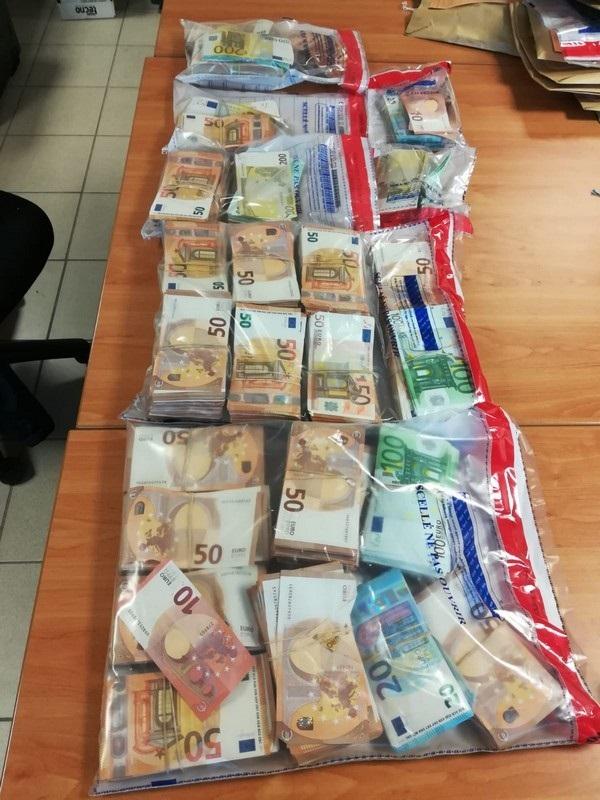
https://www.europol.europa.eu/newsroom/news/19-arrested-in-france-and-italy-in-multi-million-gold-laundering-operation
ONE OF THE 2019 FRANCE STORIES ABOUT THE VICE. click the link above